The marble within: La Pieta, self-actualisation and why I life model.
The first time I saw Michelangelo’s Pietà in the Vatican, I didn’t just see marble; I saw a moment suspended in time—the absolute weight of human grief, rendered with impossible tenderness. It's a masterpiece that captures the divine in the human form. This powerful fusion of the physical and the transcendent is a feeling I carry with me into the studio every time I life model.
For me, life modeling isn't a job so much as it is a practice in presence, a contemporary pursuit of self-actualisation inspired by the enduring power of art history.
The Sacred in the Secular Studio
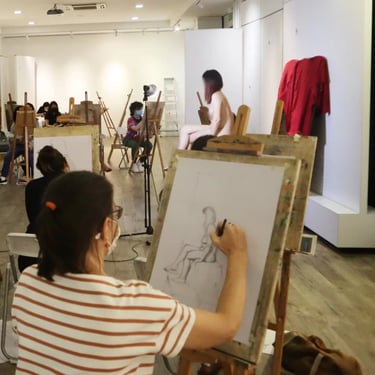
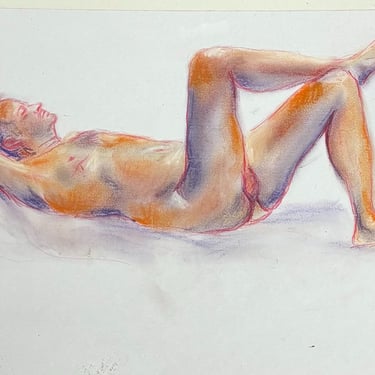
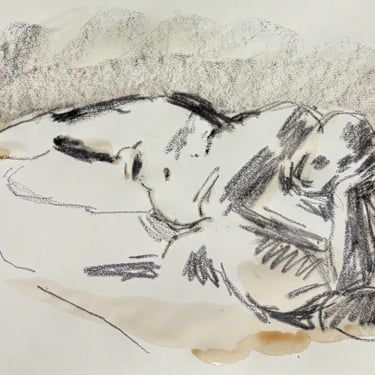
Life drawing is fundamentally about observation. In the classroom, the human body is not objectified; it is studied. Artists are tasked with translating the three-dimensional, living, breathing reality of a person onto a two-dimensional surface. They focus on the fall of light, the curve of a muscle, the tension in a hand—the raw mechanics of existence.
This environment evokes the spirit of works like the Pietà. Michelangelo elevated the physical form to express profound spiritual truths. In a life drawing studio, we engage in a similar, though secular, process. My body becomes the subject, a vessel for the artist's exploration of form and emotion. I am not simply "naked"; I am a source of inspiration and education. This transforms a potentially vulnerable act into a profound collaboration, lending it a sense of quiet reverence.
Holding the Pose, Finding Myself
Abraham Maslow’s concept of self-actualisation—the desire to become the most complete version of oneself—often involves moments of transcendence and profound presence. Life modeling offers a unique pathway to this state.
Holding a pose for an extended period requires intense mental discipline. The initial discomfort fades, replaced by a meditative stillness. My mind is forced to disconnect from the frantic pace of modern life and exist purely in the "now." In that stillness, I find clarity. This meditative practice is my own small act of actualisation: I am fully present in my own skin, accepting its form, flaws, and strengths. I am using my body as a tool for art, finding purpose in being still.
The Collaboration of Existence
When you look at the Pietà, you are not just admiring Michelangelo’s skill; you are feeling the human experience he captured. As a life model, I am part of countless new experiences being captured every session.
I am a collaborator in the artistic process, helping students develop their skills, their observational eyes, and their understanding of anatomy. Each drawing produced is a unique interpretation of the same reality—my reality—providing a myriad of perspectives that are humbling to witness. It's a deeply empowering exchange, fostering a sense of contribution and connection.
The Art of Being Human
Ultimately, I life model because it connects me to something larger than myself—to art history, to the creative community, and to my own sense of being. It allows me to see my body not through the judgmental lens of media and culture, but through the discerning, appreciative eye of the artist.
Like the timeless marble of the Pietà, life modeling is about finding the inherent beauty and dignity in the human form, and in that process, discovering the stillness and strength within myself. It is, quite simply, my way of sculpting my own life, one pose at a time.
Life model blog

Nude, not rude - a life model blogs
Life modelling isn’t about perfection or beauty — it is about honesty, history, and the art that’s created from the human form. From Michelangelo’s David to the modern studio, the body has always been our greatest teacher.
Recently a fellow model was the subject of expressed attitudes regarding her appearance, something that understandably deeply affected her self confidence but also revealed a fault within the person expressing the views - an artist who believes that art groups wish to see "lissom younger models now on offer". This caused me to stop and think, and consider why life modelling is important and is not something predicated on the perceived 'beauty' of the model.
In a world where images fly past us at lightning speed, it’s easy to forget that there was a time when the human body—unfiltered, un-retouched, and unashamed—was the foundation of all artistic study. Today, life modelling continues that lineage. And yes, it is nude… but never rude.
Understanding why requires stepping back into the long, rich history of figurative art.
The Nude: One of Art’s Oldest Languages
From the Venus of Willendorf to Michelangelo’s David, the nude has been an artistic subject long before modern concepts of “inappropriate” or “taboo” existed. For centuries, artists studied the unclothed human form not to provoke but to understand:
proportion
movement
light and shadow
emotion conveyed through posture
The body is the most universal subject we have. It belongs to no era, culture, or trend. It is timeless.
Michelangelo himself believed that the human figure was the cornerstone of all visual art. He famously taught that “If you can draw the human figure, you can draw anything.”
And he was right—the structures, forms, and rhythms found in the body echo through landscapes, architecture, and even abstract work. Mastering the figure trains the eye in ways no other subject can.
David: More Than a Statue — A Symbol of Human Potential
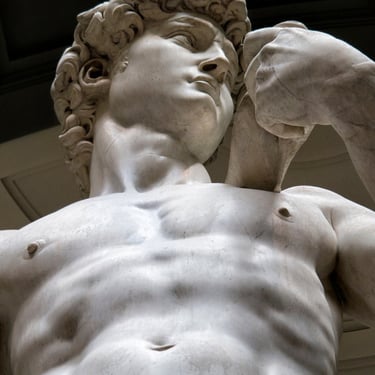
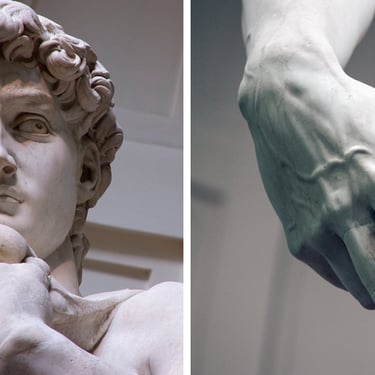
Michelangelo’s David is often described as the most perfect sculpture ever made. But what makes it extraordinary isn’t beauty alone—it is understanding.
The marble wasn’t carved to sexualise the body or sensationalise nudity. Instead, Michelangelo revealed what he believed to be the purest expression of human capability: focus, strength, vulnerability, proportion, and spirit.
Life modelling today continues that same pursuit. Models aren’t posing to be admired as individuals—they are offering artists the chance to study the same principles that shaped masterpieces.
Nude, Not Rude: The Purpose Behind Life Modelling
So why must life modelling be nude?
Because clothing hides:
the curve of the spine
the rotation of the ribcage
muscle groups in tension or rest
how weight is carried
how light falls on the natural form
Art needs honesty to be effective. The nude figure is the most honest subject there is.
And importantly:
Life modelling is not about the model’s sexual appeal, beauty, or “perfection.”
Artists are not there to judge; they are there to observe. The purpose is educational, expressive, and creative—not voyeuristic.
It is Not About the Body — It is About the Art
Perhaps the most misunderstood aspect of life modelling is the belief that the model is the focus. In truth, the drawing is the focus.
The artist isn’t (or should not be) thinking:
“Is this model attractive?”
They should be thinking:
“How does that shoulder sit in relation to the neck?”
“What angle does the pelvis create when weight shifts?”
“How does the light define the line of the calf?”
Life modelling is a collaboration between stillness and vision—between a body that holds a pose and an artist who tries to translate it.
It is the ultimate exercise in:
observation
patience
anatomy
empathy
and creativity
The model is the reference, not the subject of judgment.
Why Life Modelling Still Matters Today
In a digital world saturated with filters and unrealistic ideals, life drawing is one of the few spaces where the human form is seen truthfully.
It teaches us:
that bodies come in all shapes and ages, and all are worthy of study
that nudity is natural, not shameful
that art is about expression, not perfection
Life modelling remains a reminder that the human body is the original and most enduring canvas of artistic exploration.
Conclusion
Life modelling is nude—not rude—because it stands on millennia of artistic tradition.
It exists not to expose but to illuminate, not to shock but to teach.
From Michelangelo’s belief that mastering the figure unlocks all other drawing, to the lasting impact of sculptures like David, the nude figure remains central to understanding art itself.
Life modelling is a celebration of humanity, creativity, and truth.
It isn’t about the beauty of the model— it is about the beauty of the art that is created.